
Affiliate Disclosure: We’re independent & reader-supported. When you buy through our links, we may earn a commission. Learn more.
11 Oregon National Parks & Monuments to Explore

Head’s Up: You’re reading an archived post. This means we are not actively updating this article, but we still think it has value. See our Archive Policy for more info.
👉 Jump to: Best Oregon National Parks & Monuments | National Park Hikes | FAQ
There may not be many national parks in Oregon, but there are tons of fun national monuments and trails waiting to be explored. Get off the beaten path, wander hidden valleys, and traverse high mountain peaks.
As an avid traveler, I’ve been to more than half of the U.S. national parks, including most national parks and monuments in Oregon. In this article, we’ll dive into what makes each of these destinations so special. Let’s get into it!
11 Best National Parks & Monuments in Oregon
Crater Lake National Park
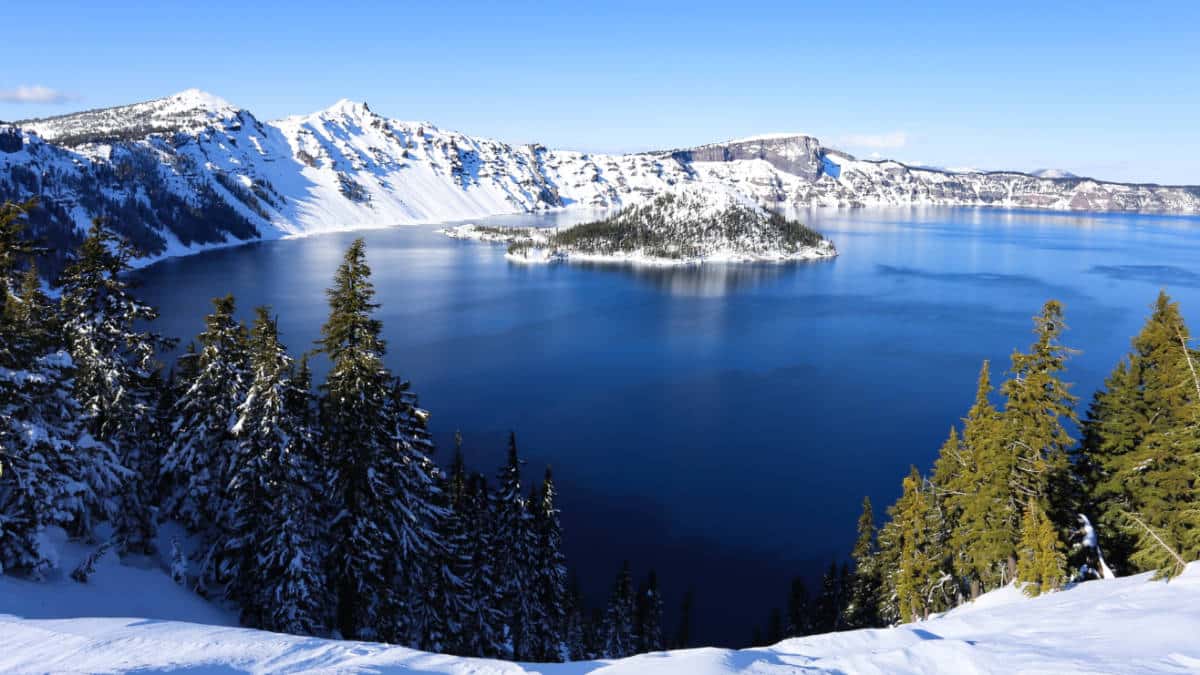
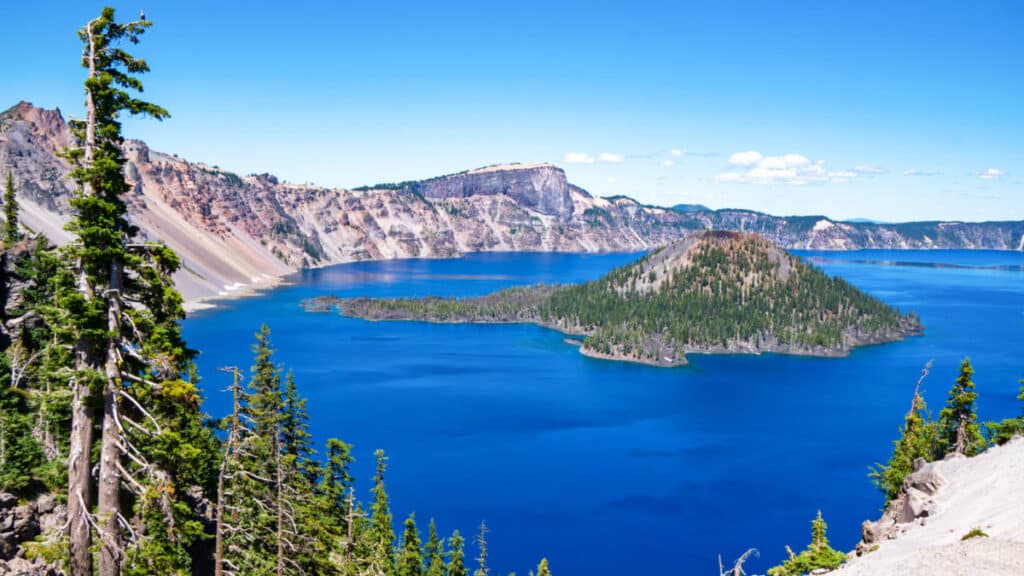
Oregon’s only national park is home to the deepest lake in America.
📍 Google Maps | 🌳 Crater Lake National Park Website
Crater Lake National Park is the state’s sole national park, and easily the most visited nationally-protected area in Oregon.
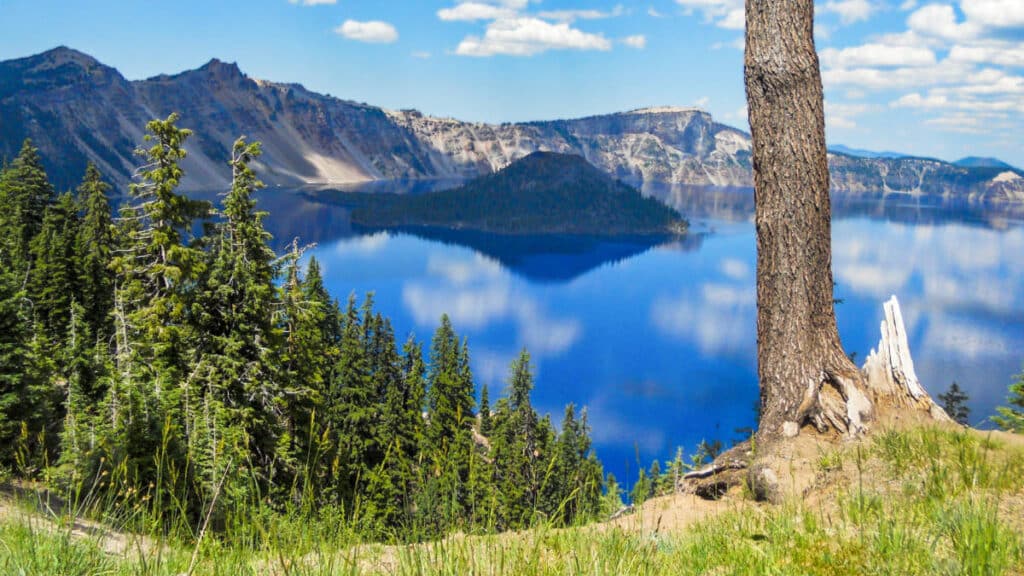
The deep blue Crater Lake is the park’s main draw, as it’s the deepest lake in the country. It formed when Mount Mazama erupted over 7,000 years ago. Explore the caldera lake on a short boat ride to Wizard Island, the lone island in the middle of the lake. Or opt to hike around the perimeter of the lake for the best photo opportunities.
Most roads are closed and hikes are nearly impossible in the winter due to heavy snow. Visit Crater Lake National Park in the summer for the best possible experience. And as always, be sure to bring the essentials we’ve included on our national park packing list.
Oregon Caves National Monument
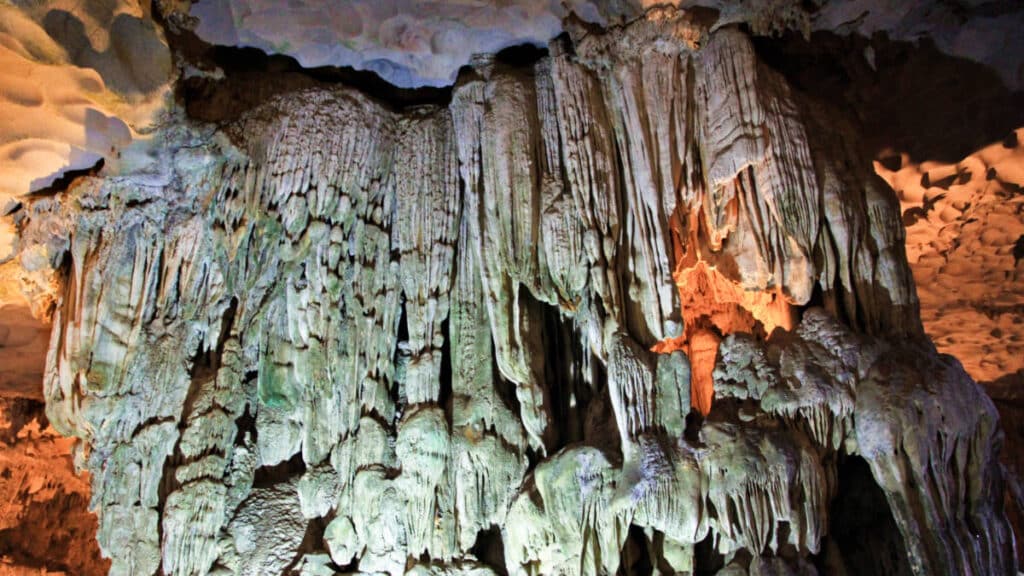
Explore a geological treasure in southern Oregon, winding your way through subterranean passages by candlelight.
📍 Google Maps | 🌳 Oregon Caves National Monument Website
Make sure you pack a headlamp before you venture deep into the belly of the Siskiyou Mountains at Oregon Caves National Monument.
This monument is a perfect stop along a southern Oregon road trip. While exploring the caves, photograph (hopefully) sleeping bats, water dripping from stalactites, and other spooky cave formations.
Oregon Caves National Monument is unlike any other in the Pacific Northwest. Take a candle-lit cave tour during the day before settling down at your campsite in the evening to conclude a full day of national monument fun.
👉 Read our Oregon packing list for a full breakdown of what to bring, and get a free, printable version of our Oregon packing list here!
Oregon National Historic Trail
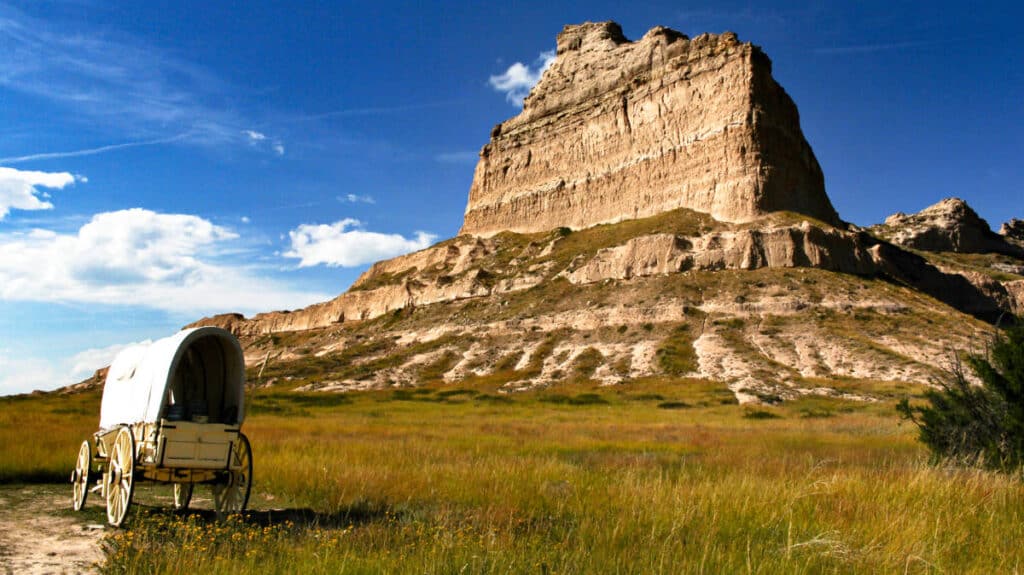
Trace the historic route of the American frontier along various sites in Oregon.
📍 Google Maps | 🌳 Oregon National Historic Trail Website
Learn more about Western migration on the Oregon National Historic Trail. More than 2,000 miles of trails weave through six U.S. states, tracing the patterns of historic pioneers pushing west.
Put yourself in early American settlers’ felted wool shoes and visit a museum, historic site, or church along the trail from the Missouri River to Oregon.
The End of the Oregon Trail Interpretive Center in Oregon City is the best place to go for visitors interested in the country’s migratory past. Learn from the “Oregon’s First People” documentary on display or take a native garden planning workshop to learn about the native environment’s impact on settlers’ diets.
Lewis & Clark National Historical Park
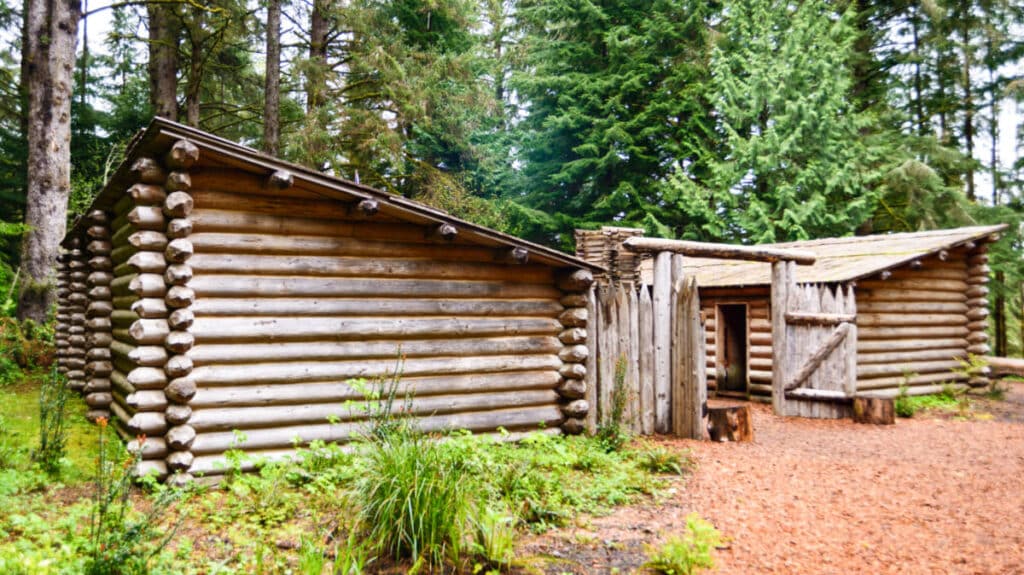
Discover the winter resting place of the famous Lewis & Clark expedition, now marked with reconstructed cabins and artifacts.
📍 Google Maps | 🌳 Lewis & Clark National Historical Park Website
The Lewis & Clark National Historical Park stretches from northern Oregon into southern Washington on the banks of the Columbia River. This historical park offers guests the opportunity to follow in the famous explorers’ footsteps at 12 sites along the Pacific Coast.
Stop by Clatsop Indian Village to view a replica of a Native American longhouse the explorers built to shelter in during the winter. I recommend exploring some of the same trails as the Lewis & Clark expedition like the Kwis Kwis Trail and the Clay Pit Pond Trail.
Don’t forget to stop by the historical park museum for a chance to view one of two historical films on display about famous past voyagers.
Nez Perce National Historical Park
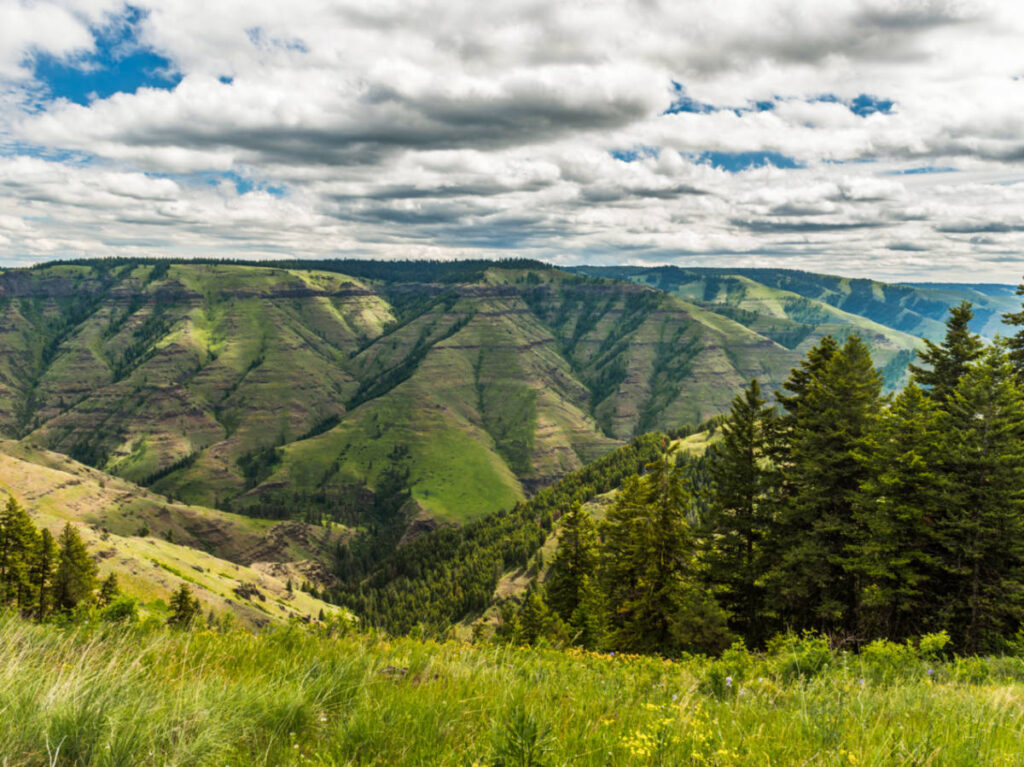
Learn about the culture and history of the Nez Perce people at important Indigenous sites in northeastern Oregon.
📍 Google Maps | 🌳 Nez Perce National Historical Park Website
The grand Nez Perce National Historical Park spans across four U.S. states and encompasses 38 historical sites of the Nez Perce peoples.
Educate yourself on the important history and culture of the Nimíipuu people, or Nez Perce, in northeastern Oregon sites, which in Oregon include Chief Joseph’s Gravesite, Lostine Campsite, and Joseph Canyon Viewpoint.
John Day Fossil Beds National Monument
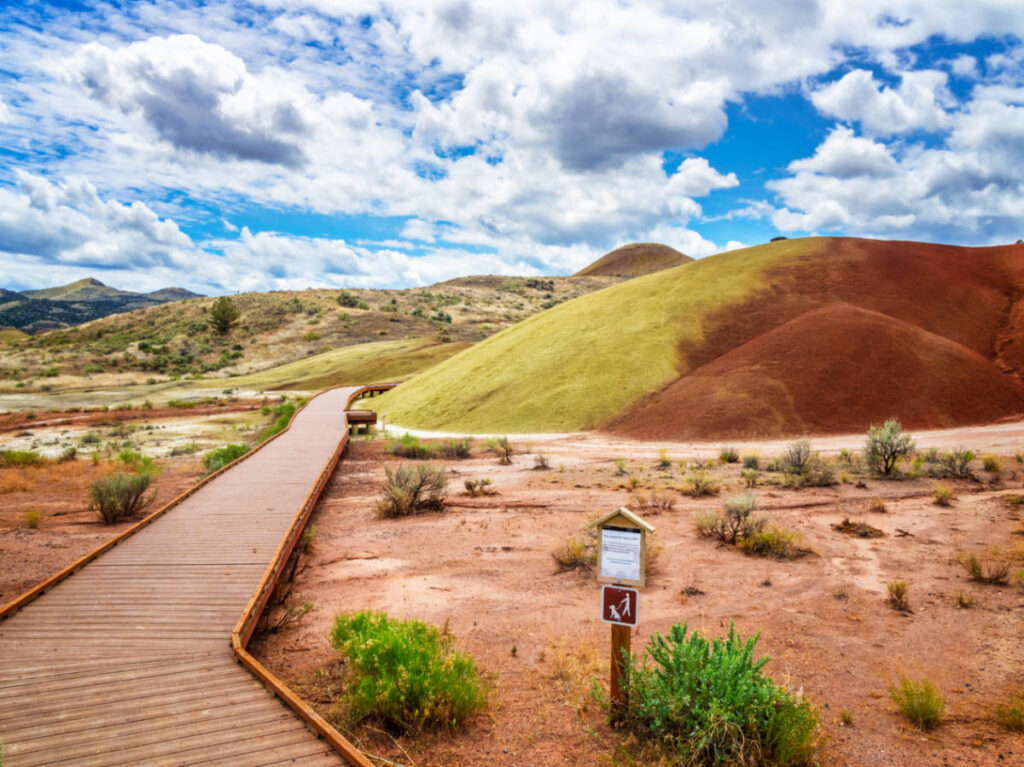
An artist’s palette of stratigraphic hues makes this central Oregon monument stand out against the rest.
📍 Google Maps | 🌳 John Day Fossil Beds National Monument Website
John Day Fossil Beds National Monument, known as the “badlands of the Pacific Northwest,” is one of the most famous places in dry and sunny Eastern Oregon. The monument consists of three different units: Sheep Rock, Clarno, and the dazzling Painted Hills.
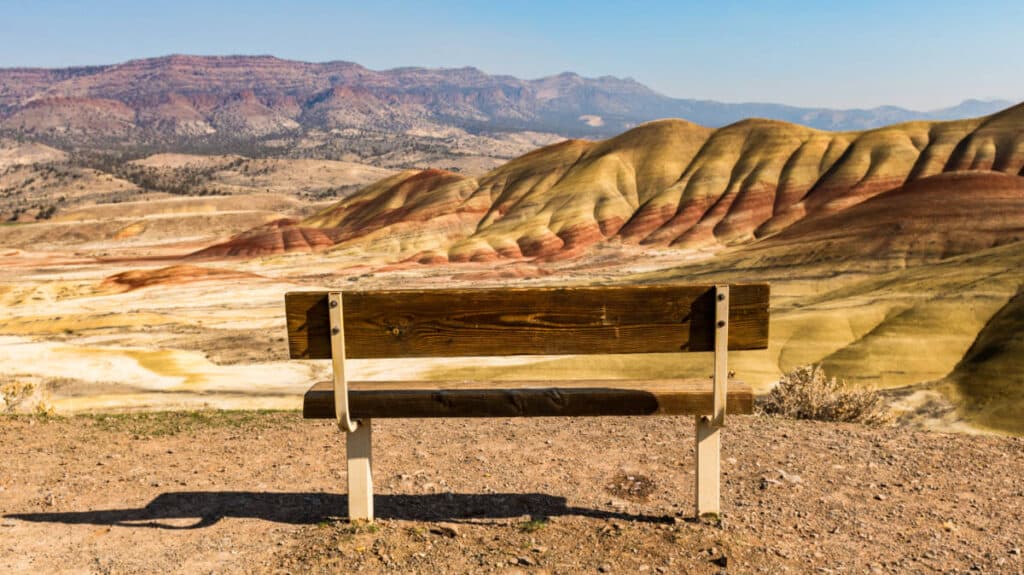
Visit Painted Hills to see beautiful earth-toned rock formations. They’re one of the most-well known sights in this national monument. Throughout the John Day Fossil Beds, you’ll be able to view a preserved ecological record of plant, animal, and climate evolution.
Don’t forget to stop by the Thomas Condon Visitor Center in Clarno to speak with knowledgeable park rangers and learn more about the world of fossils.
Ice Age Floods National Geologic Trail
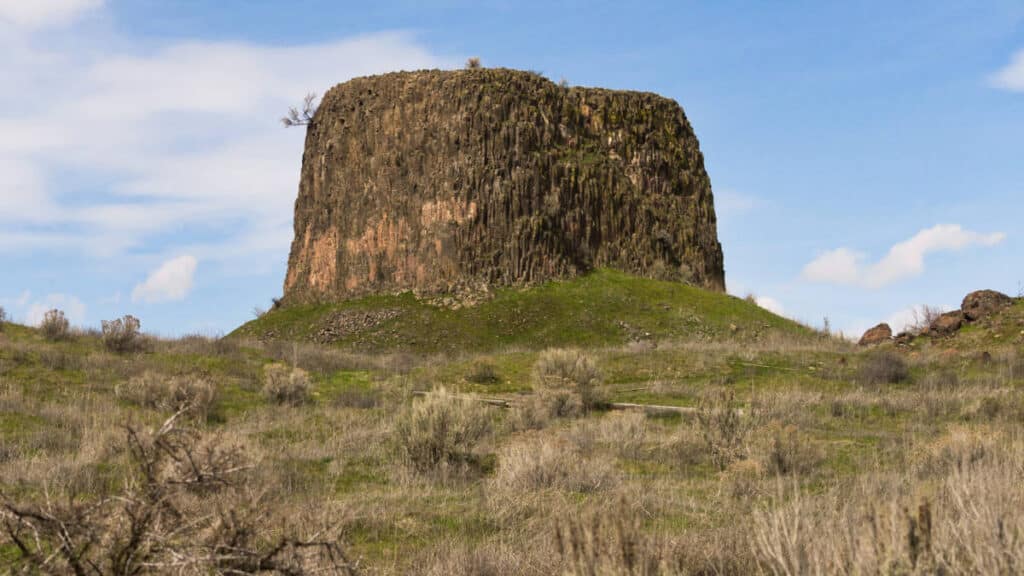
Find evidence of Ice Age flooding in sediment at various sites around the Pacific Northwest.
📍 Maps | 🌳 Ice Age Floods National Geologic Trail Website
Follow the route where water burst across Oregon’s landscape 18,000 to 15,000 years ago on the Ice Age Floods National Geologic Trail.
The story of an ice dam bursting and spreading more than 500 cubic miles can be found in rock and sediment today. Reminders of repeated Ice Age flooding have defined the landscape, from giant basaltic coulees to high water lines and dry falls.
Visit Hat Rock State Park, Columbia River Gorge Discovery Center & Museum, Multnomah Falls, and Willamette Falls, among other places, to follow the ancient Ice Age Floods National Geologic Trail.
Newberry National Volcanic Monument
Thousands of acres comprise this volcanic monument, complete with alpine lakes and mountain peak trails.
📍 Google Maps | 🌳 Newberry National Volcanic Monument Website
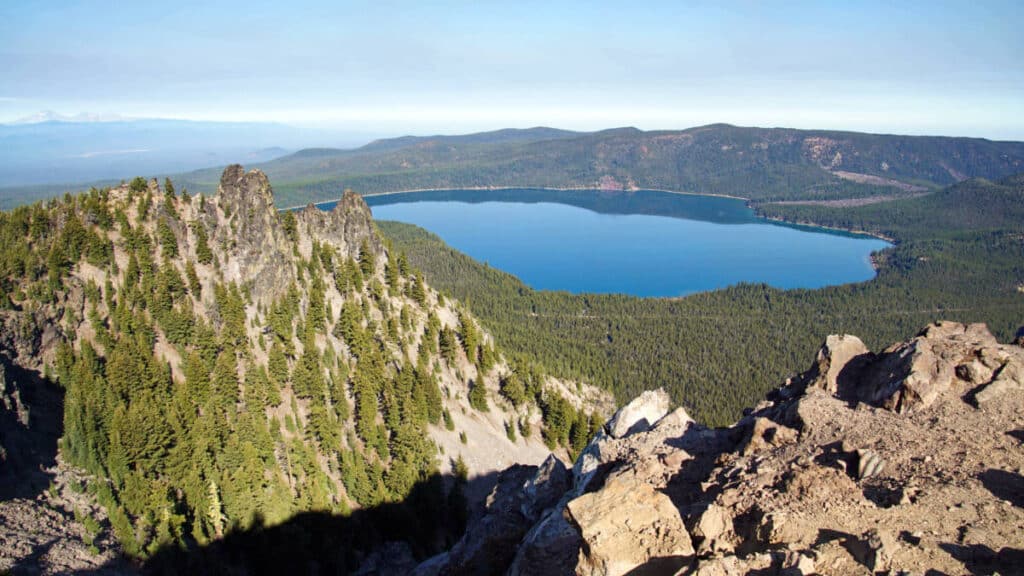
Newberry National Volcanic Monument is Oregon’s unique central lava land. It has over 54,000 acres of hiking trails, lakes, lava flows, and other geologic features.
I recommend hiking up Paulina Peak, the highest point in the monument with 360-degree views of the surrounding Cascade Mountains and the Newberry crater.
Put your geologic skills to the test at Newberry Monument and look for the numerous cinder cones, vents, obsidian, and basalt flows in the area. This is the only monument in the state with an active volcano. Plus, it’s one of the coolest places to camp in Oregon.
Lewis & Clark National Historic Trail
Visit the same coastal and inland sites as the 1840 expedition of Lewis and Clark.
📍 Google Maps | 🌳 Lewis & Clark National Historical Trail Website
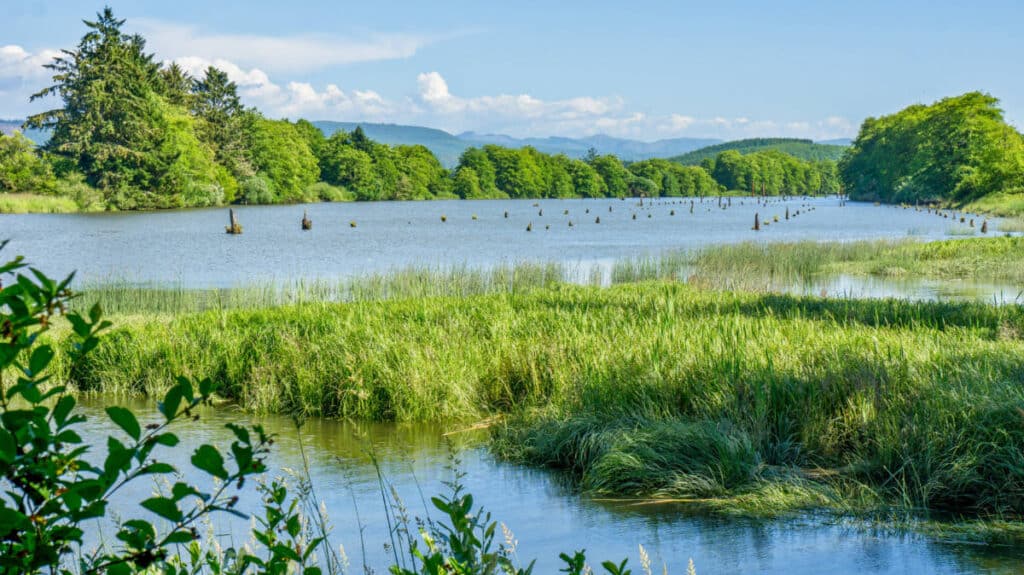
Follow the traces of the famous Lewis and Clark expedition along the Lewis & Clark National Historic Trail. This 4,900-mile trail impressively spans 16 U.S. states from Pittsburgh, Pennsylvania to the Pacific Ocean.
Hike along a portion of the trail for your chance to relive history. Places to visit in Oregon along the trail include Cannon Beach, Salt Works, Fort Clatsop in the Lewis & Clark National Historic Park, Sandy River Delta, and the historic Columbia River Highway.
Water trails are an exciting, adrenaline-rushing way to follow the path of Lewis, Clark, and Sacagawea. Kayaking on the Columbia River is my favorite way to experience this historic trail.
California National Historic Trail
Learn about America’s biggest emigration at various Gold Rush museums and monuments along this historical trail.
📍 Google Maps | 🌳 California National Historic Trail Website
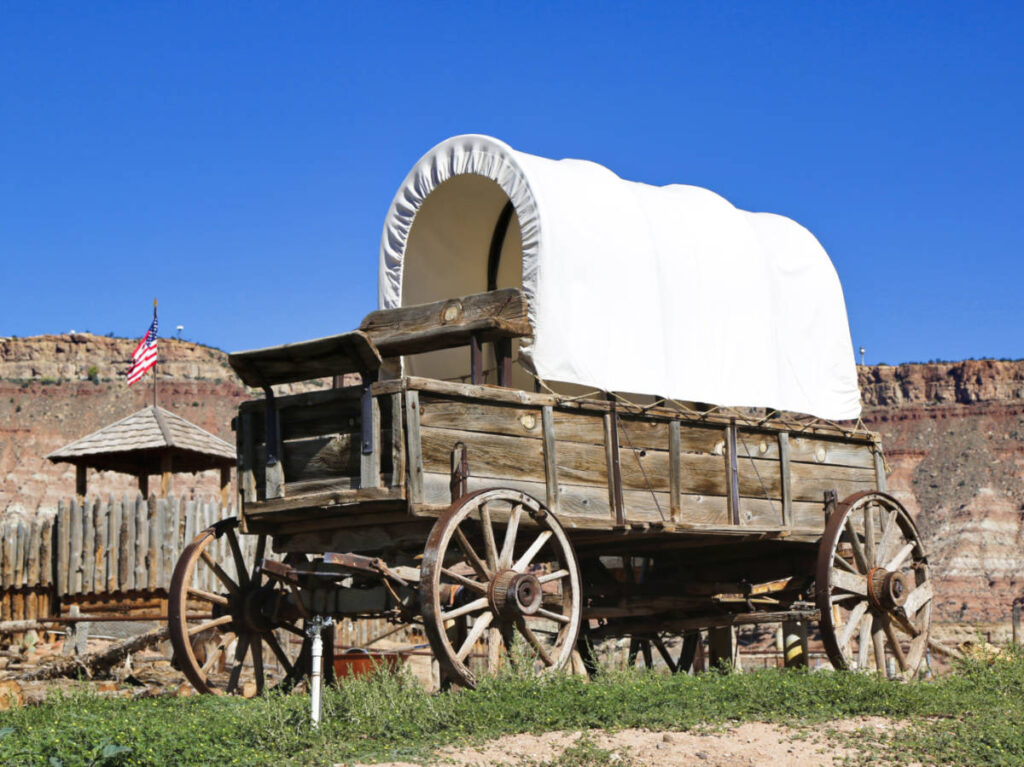
The California National Historic Trail traces “Gold Fever” from the California Gold Rush and documents the story of over 250,000 emigrants.
Learn more about the greatest migration in U.S. history along this 5,000-mile historic trail. The California National Historic Trail received heavy traffic in the 1840s and 1850s from emigrants hoping to strike gold in 10 U.S. states, including Oregon.
Visit the Douglas County Museum of Historical and Natural History in Roseburg, Oregon to learn about the aureate event that defined American culture today.
Fort Vancouver National Historic Site
An old trading post and frontier-era fort inhabit both Washington and Oregon territory.
📍 Google Maps | 🌳 Fort Vancouver National Historic Site Website
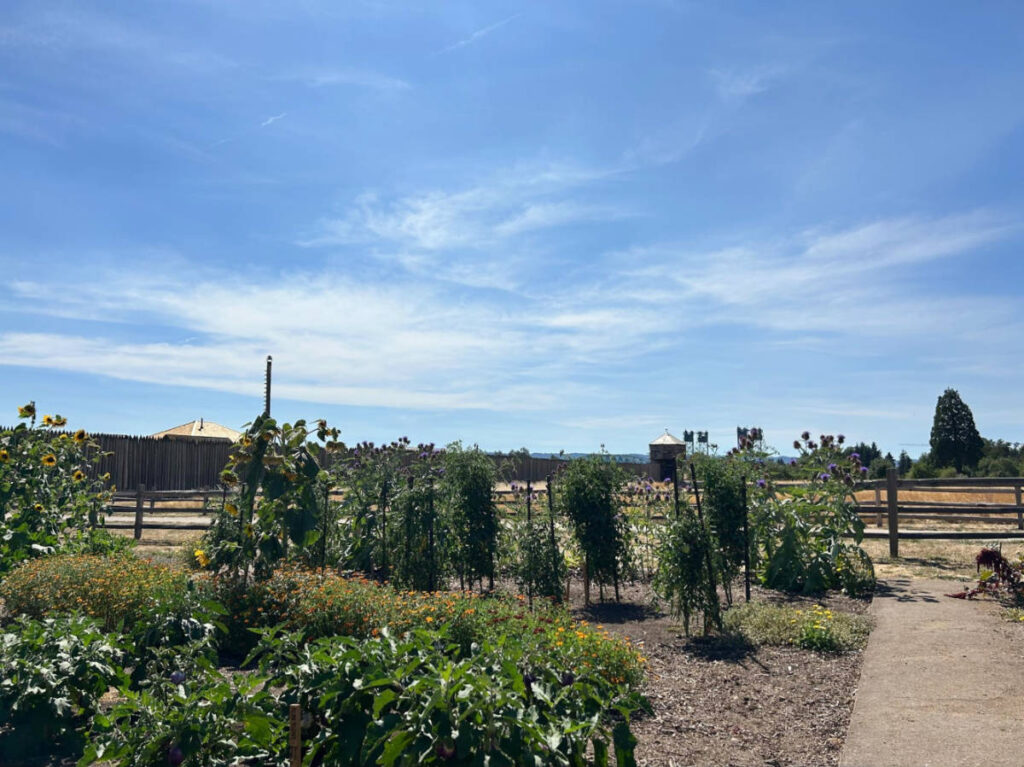
While the Fort Vancouver National Historic Site is shared across Washington and Oregon, it’s primarily in Washington. Getting to Fort Vancouver is an easy 25-minute drive across the bridge from Portland.
Discover one of the first permanent settlements on the West Coast of pioneers who set out from the Rocky Mountains. The historic site encompasses 191 wilderness acres and three historic sites. These include a Hudson’s Bay Company fur trading post, the Vancouver Barracks, and Pearson Field.
Fun family activities at the fort include a blacksmith or cooking demonstration and a chance to see archaeological work in the Fort Vancouver Village.
Best Hikes in Oregon’s National Parks
Discovery Point Trail
One of Crater Lake’s most popular trails is ideal for the whole family.
📍 Google Maps | 🌳 Discovery Point Trail Website
This trail within Crater Lake National Park is one of the most popular hikes in Oregon. At only 2.1 miles, it’s suitable for visitors of all fitness levels and generally only takes about an hour to complete.
Discovery Point Trail is best tackled in the summer when the snow and ice have melted from the path. Winter adventurers typically involve cross-country skiing along this trail with a good 4-wheel-drive vehicle. Unfortunately, dogs aren’t allowed on the trail so you’ll have to leave them at home.
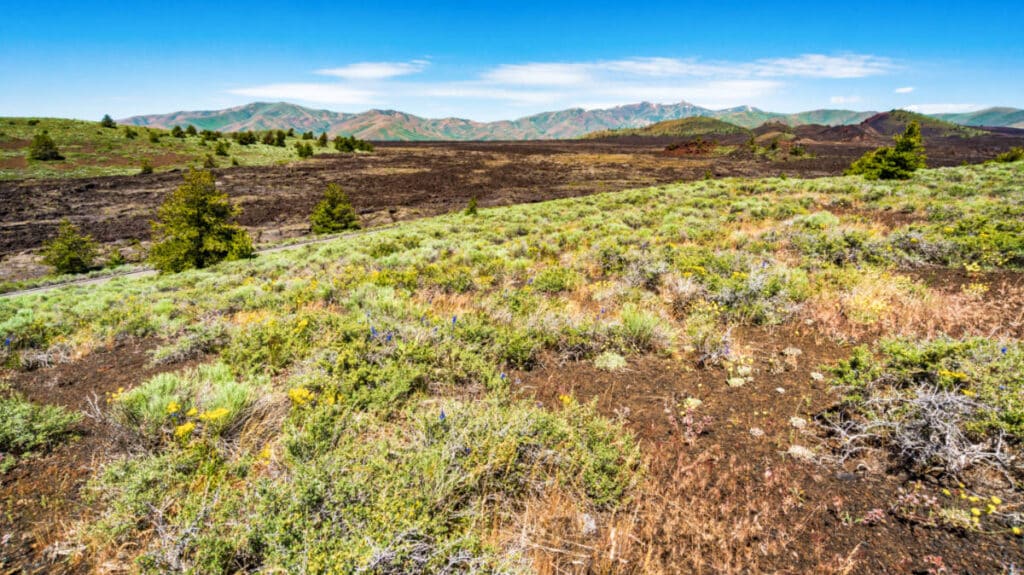
Bigelow Lakes – Mt. Elijah Loop Trail
The perfect above-ground hike to alpine lakes at Oregon Caves National Monument.
📍 Google Maps | 🌳 Bigelow Lakes Website
The hike to Bigelow Lakes from Mt. Elijah Loop Trail is one of my favorites in Oregon Caves National Monument. At 9.7 miles round-trip, this hike is no walk in the park but it is scant on tourist crowds and rich with sweeping views.
The best time to hike this trail is in the summer when snow has completely melted on the trail. Enjoy the fresh pine scent along the way and bring your binoculars to spot wildlife actively grazing.
The Bigelow Lakes hike typically takes all day. Rest for a while once you reach the 6,390-foot summit and bask in the fruits of your labor.
👉 Pro Tip: You’ll want to have the top hiking essentials with you for this all-day excursion, including a water filtration system.
Painted Hills Overlook
A quick hike to a colorful viewpoint of the John Day Fossil Beds.
📍 Google Maps | 🌳 Painted Hills Overlook Website
The Painted Hills Overlook trail is only 0.5 miles round-trip and one of the quickest ways to get an aerial view of the John Day Fossil Beds. Follow an old road to the overlook and remember not to “hurt the dirt.”
The John Day Fossil Beds National Monument is strict on preserving and maintaining the geologic and paleontological resources found in the soil. Help preserve the fossils for future generations by staying on the trail at all times.
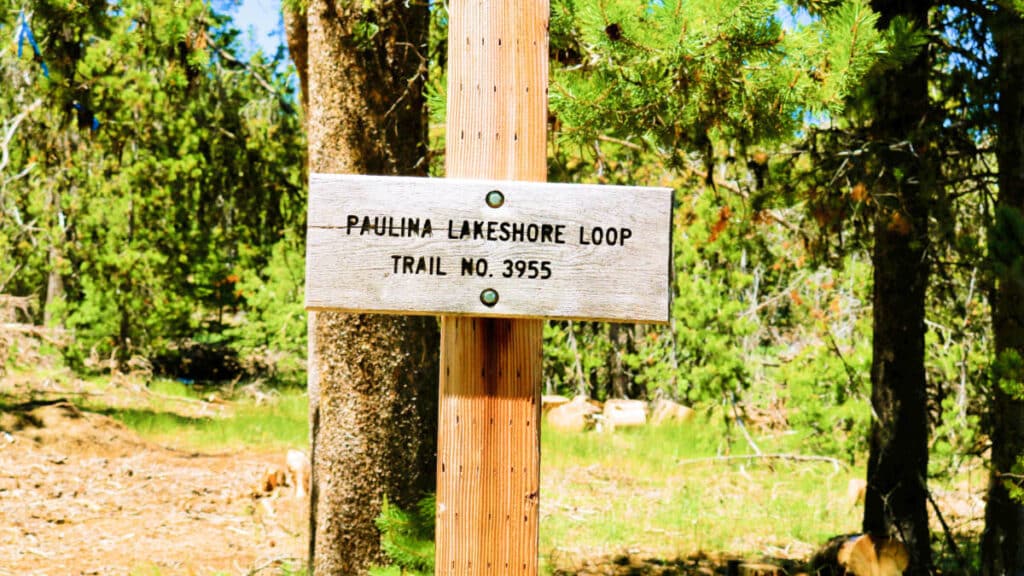
Paulina Lakeshore Loop
Hike around the perimeter of Paulina Lake or trek to the Newberry Monument hot springs along this alpine trail.
📍 Google Maps | 🌳 Paulina Lakeshore Loop Website
The Paulina Lakeshore Loop is one of the best hikes in Newberry National Volcanic Monument for visitors who prefer an easy trek. This trail follows the perimeter of Paulina Lake, with panoramic views of the alpine waters and caldera for its entirety.
The whole trail is 7.5 miles but is mostly flat with only a few short uphill sections. Pack a lunch and have a picnic along the lakeshore to break up the long hike or bring your bathing suit and go for a swim.
The best part about this hike is the natural hot springs along the trail. Five springs range from 90-115 degrees right on the Paulina Lakeshore. The springs fill to capacity on the weekends, however, so be sure to hike in as early as possible!
Netul River Trail
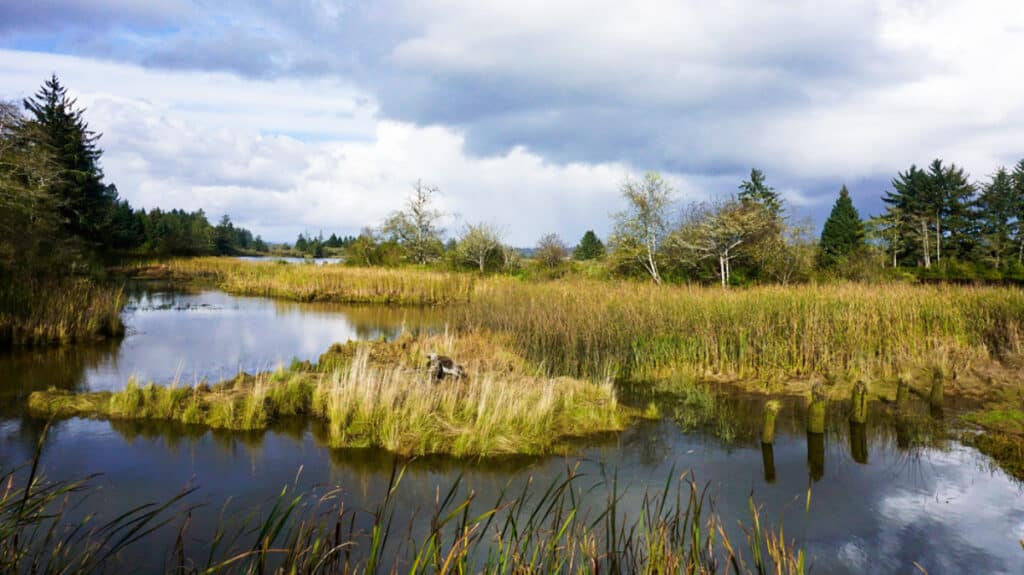
A scenic river trail in the Lewis & Clark National Historical Trail Monument.
📍 Google Maps | 🌳 Netul River Trail Website
Hike along the river on the Netul River Trail, one of the top hikes near Portland. This 1.25 one-way trail leads from the Historic Canoe Landing to the South Netul Landing in the Lewis & Clark National Historical Trail Monument.
There are pit toilets along the way and a water bottle refill station at the Fort Clatsop Visitor Center. Additionally, you are likely to encounter only a few other hikers on this quiet trail, giving you the solitary experience in nature you hoped for.
***
Eureka! You’ve found your way to the end of our national parks in Oregon list. Before you head out to explore the state’s parks, monuments, and trails, be sure to check out our list of the best things to do in Oregon to find other nearby attractions.
